Author Archives: Alissa Sklar

How to help your teen get through end of semester exams

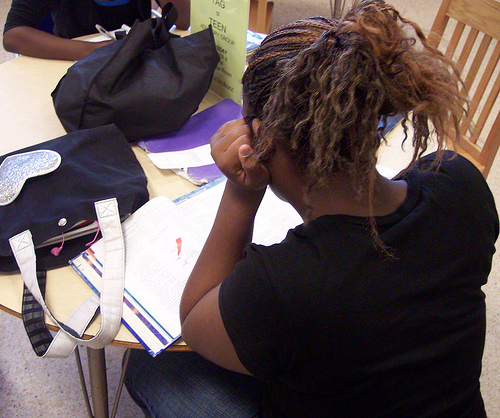
Teen studyingThe last week before holidays is exam period for many kids in high school, middle school, CEGEP and junior college. And since your teen is probably already worn out by all the end of semester assignments, holidays concerts, parties and family commitments, there’s a good chance they are heading into their exam rooms a bit frazzled and stressed out.

All the residual stress and anxiety can put them at an academic disadvantage when the exam booklets are handed out, potentially lowering their test scores. It also means your teens may be more likely to get into arguments with family members, experience random emotional blowouts or isolate themselves in their rooms, earphones on, doors shut.

But sometimes, when all their physical cues shout “Stay away!” they are actually calling out for thoughtful and considerate input. Here are some things you can do to help them (and everyone else) survive the exam week crunch.

Get tough on sleep. Now, more than ever, they need to unplug their devices (computers, iPads, phones) and get them out of their rooms at bedtime. All-night study sessions are almost always a waste of time and energy. This is not the time for group sleepover study sessions with friends or late nights cramming at the library. Help them establish a sleep routine that guarantees they show up for their exams well-rested.

Limit other commitments. Try to control the amount of non-studying related events around this time of year. The office holiday party that includes families, the neighbourhood carolling, Great Aunt Selma’s tree-trimming, Bubby’s annual latka fry-up — whatever the things that get your family out the door in mid-December– can all add up to a lot of time away from the books. And while your teen will benefit from breaks and a change of scenery, all of this forced socializing can be painful to your average 14 or 16-year-old. In terms of relaxing and recharging, they’d be better off taking the dog for a run, reading a novel or practicing guitar. Try and find a reasonable balance for them.

Feed their bodies, feed their brains. On the mornings before exams, I always get up 10 minutes early to cook my daughters a hot breakfast. They have almost no appetite at 7 a.m. (and who can blame them?), but I know from personal experience what it’s like to write a two-hour exam with nothing in your system. So I make eggs and hash browns, oatmeal pancakes or fruit and yogurt smoothies so that they have a bit of protein and carbs before they head out the door.

I try to extend this philosophy to their study sessions as well. My work requires me to do a lot of writing and research, and I know all too well how snacking can function as a procrastination tool or distraction. Instead of fattening and salty processed convenience foods, I try to have a ready supply of cut up fruit and veggies, cheese sticks, popcorn or homemade mini muffins around.

Offer the kind of support they need. This will almost certainly not sound like a lecture on study skills. It will not be a series of frustrated comments about their messy rooms, disorganized backpacks or crumpled, incomplete course notes. You’re kind of too late for this now, and it’s not going to help matters or lessen anxiety levels. Pick your battles.

This is the time to hang out quietly. A quick jam session on Guitar Hero. A cuddle before bedtime. Twenty minutes hanging out together in front of the TV. A quick run out together to get hot chocolate. Listen when they talk. If they ask for help getting organized, then step in. If they don’t, well, they will quickly learn on their own what they need. During exam period, you will be a far more helpful and calming force if you can help keep their stress down and offer a sympathetic ear.
   Send article as PDF   

Contribution: How doing things for others builds kids’ resilience

Kids Save the WorldThese three weeks before the official holiday break are particularly stressful. It’s a perfect storm of cold weather, 4 p.m. sunsets (and 7:30 a.m. sunrises), school and work deadlines, end of year concerts, holiday parties, gift buying, list-making and baking. Tempers are short, emotions easily ruffled and wallets depleted.

So I figured this was a perfect time to write about one of the most overlooked of the 7 Cs of resilience: contribution. Because kids really can help make the world a better place.

According to the American Academy of Pediatrics, “when children realize that the world is a better place because they are in it, they will take actions and make choices that improve the world. They will also develop a sense of purpose to carry them through future challenges.”

Wow. There’s a lot of juicy stuff there to think about: doing things for others, resisting self-absorption and narcissism, a deep connection to a cause or community, empathy, sensitivity, creativity, purpose. It’s so important that it’s incorporated into the last step of Alcoholics Anonymous’ Twelve Step Program: to help others who are battling alcohol addiction.

These are wonderful qualities in any human being, and it’s easy to appreciate how they will improve the world around them. The brilliance of this particular aspect of resilience is that they also benefit the person who embodies them. It’s not entirely selfless to be selfless. It makes kids and adults not only better, but also stronger. More able to resist the temptations and poor choices everyone has to confront from time to time.

I’m not talking about metaphysical connections or anything spiritual here – the power of contribution is the groundedness it offers. It lets kids feel they personally have something to offer the world, to make something better in some way, however small.

So what does contribution actually look like, and how can we help our kids build it? Most people will initially think about charitable acts: collecting items for Christmas hampers to the poor, visiting the elderly, working at a soup kitchen, being a Big Brother or Big Sister to a younger child in need. These things are amazing, and certainly important to the people whom they benefit, as well as to children who learn the pleasure of giving, (as well as challenging the sense of entitlement many kids seem to carry around with them).

But these activities may only happen once in a while, or you may be looking for something closer to home. In my opinion, there are many wonderful opportunities within the family. Regular chores (for which they are not paid) help a child develop a sense of contribution to the family, even if they grumble about folding laundry, setting the dinner table or walking the dog. Helping a younger sibling with homework gives them a sense of pride, deepens family relationships, and takes some of the heat off parents.

Little kids can contribute to the family as well, though sometimes that “help” requires a bit of patience. Counting out cutlery for the dinner table. Keeping their room tidy. Feeding the family pet. Start small and build on them as they get older.

They can also plenty of ways to contribute time and energy for their schools, soccer teams, churches, synagogues, mosques or temples.

The thing about contribution is that it requires a bit of commitment. It isn’t always glamourous and it isn’t always fun. So prepare yourself for some eye-rolling and attitude. But stick it out: the pay-off is in the difference it makes, short and long term.

   Send article as PDF   

Practical challenge: How we put JoAnn Deak’s wisdom to work in our family

After last week’s post on the extremely engaging JoAnn Deak lecture, my friend Dana emailed me. Great post, she said, but can you tell me how it has practically changed the way you parent your kids?

Dana doesn’t mince words. She likes her information clear, concise and practical. I respect that.

So what follows is an outline of some of the things I did after hearing Dr. Deak talk about the connection between brains, biology and parenting.

First thing I did was explain Dr. Deak’s main points to my kids. They need to understand that the brain structure responsible for their executive functions isn’t fully developed, which is why their dad and I need to help guide them through adolescence. They need to know about their “mistake filter” (anterior cingulate cortex) and their emotional response to stress (amygdala), just like they know about losing their baby teeth or the changes of puberty. So now, when they moan about my insistence that they switch off their iPads and do their homework instead, they roll their eyes and grumble about the developing pre-frontal cortex.

In fact, Dr. Deak told a good story about taking her 13-year-old daughter (who had already developed the body of an 18-year-old woman) shopping for a bathing suit. When her daughter picked a small bikini, her mom balked, aware that a 13-year-old in a revealing bathing suit may provoke reactions from boys and men that she was not yet old enough to handle on her own. Now she could have talked about the ways her 13-year-old was inappropriately sexually objectifying herself. She could have talked about the racy messages she was sending to others about her personality and reputation. She could have forbidden the bathing suit on the grounds that it was immoral and inappropriate. But none of that would have been terribly effective, and would have just resulted in the particular kinds of hurt feelings and frustrations mothers and teen daughters can provoke in each other. She also knew that her daughter didn’t have a lot of self-confidence yet, but was proud of her newly developed body.

So instead she talked about the developing brains of teenage boys, who though normally her friends, when faced with her newly curvaceous body might forget about the sensitive 13-year-old mind inside and treat her differently. In ways that might be confusing and upsetting. Her daughter, used to these biological explanations, relented and agreed to wear a cover-up over the bikini.

Potential disaster averted.

JoAnn Deak’s lecture also gave me new impetus for something we always believed – the whole “Hug Your Monster” idea. Anything that frightens our kids or they find difficult — but which we all agree is meaningful — becomes something we really have to work on and push through. This is true for girls and boys. My husband has always pushed them with hiking, snowshoeing, physical stuff; he really feels they learn something by pushing slightly beyond their comfort zone. Turns out he was right about that. It’s equally true with French verbs or speaking in public or raising your hand in class.

Dr. Deak’s lecture also reminded me about things I already knew about girls, but hadn’t really thought about it in a while — that they should be encouraged to play with blocks, Lego, building models at every opportunity. It helps them develop the spatial awareness they will need later on for math. This is of course true for boys as well, but most girls have to work harder to develop the part of the brain responsible for spatial awareness.  Our older girls spent many happy hours laying with our huge set of wooden blocks, but our youngest less so. In a cleaning frenzy a couple of years ago I banished all toys from our family room to the play room, where they are mostly ignored. I dug those toys out of the basement and put them in her room where she will see them and play with them more.

I taught them about these things, so they understand why we push them to do stuff that’s hard or scary. Also explain the whole judgment evolution thing to them. She told a great story about her 12-year-old daughter (already fully developed) who wanted to wear a tiny bikini to a pool party with the football team; because her daughter understood these basics about brain biology, she says she was able to reason with her about why she objected to that.

The lecture helped me understand our youngest daughter better, and how we can best guide her. She seems to be one the 20% of girls who react less with fear and more with aggression, as described by Deak. This child  had always kind of puzzled me because she is so different from her more typical sisters, and so different from me. When a kid in her pre-kindergarten hit her (way back when), she slugged him back! I remember being kind of worried, but also mostly relieved that she could advocate for herself so effectively.

The challenge with her (as with most boys) is to get her to slow down her impulsive go-go-go reactions to things, getting her to articulate what she is doing and why, so that she approaches risky things more reasonably (for example, going to the teacher when a kid hits her, instead of just reacting impulsively and hitting him back). She is very precocious verbally (and also very intelligent/manipulative socially) so she responds well to this, but it takes practice to get her to control her more aggressive and highly emotional response to stress. Her natural risk-taking and sensation-seeking impulses may take her to some pretty cool places in her lifetime, but we also need to guide her to make intelligent, healthy and measured choices rather than impulsive ones.

Things are different with my more typical older daughters. Recently, I took the liberty of contacting one of their teachers. One of them was having issues in her English language arts class, usually her highest mark. Her teacher had contacted me to discuss her conundrum: the Minister of Education here in Québec requires language teachers to allocate 30% to verbal participation. My daughter is very shy with that teacher and never puts up her hand. The teacher was at a loss, because while the rest of her mark was excellent, her hands are tied on this 30%.

After listening to JoAnn Deak (who says teachers in girls’ schools should never rely on mistake-averse students to raise their hands in class), I called the teacher and said “Don’t wait for her to put up her hand; call on her in class.” My daughter agreed that although she would be a bit shy when called upon, she would nevertheless Puttingalways respond (also kind of hugging her monster).  I wish all our kids’ problems were this easily solved!

Finally, I also vowed  to nag all my kids less about details. Apparently all the haranguing makes no difference in the end, and it just sours our relationship. Turns out this is one of the hardest things for me to change, but I’m working on it. I’m also trying to alter the way (and frequency) with which I praise them. There’s a great chapter on this in Madeline Levine’s The Price of Privilege, about which I keep meaning to blog.

   Send article as PDF