www.prettythin.com
The marvellous thing about the Internet is the amazing diversity of opinions, creative ideas, insightful takes on different issues and the boundless potential for self-expression. When it comes to kids and risky activities, it’s also one its downfalls.
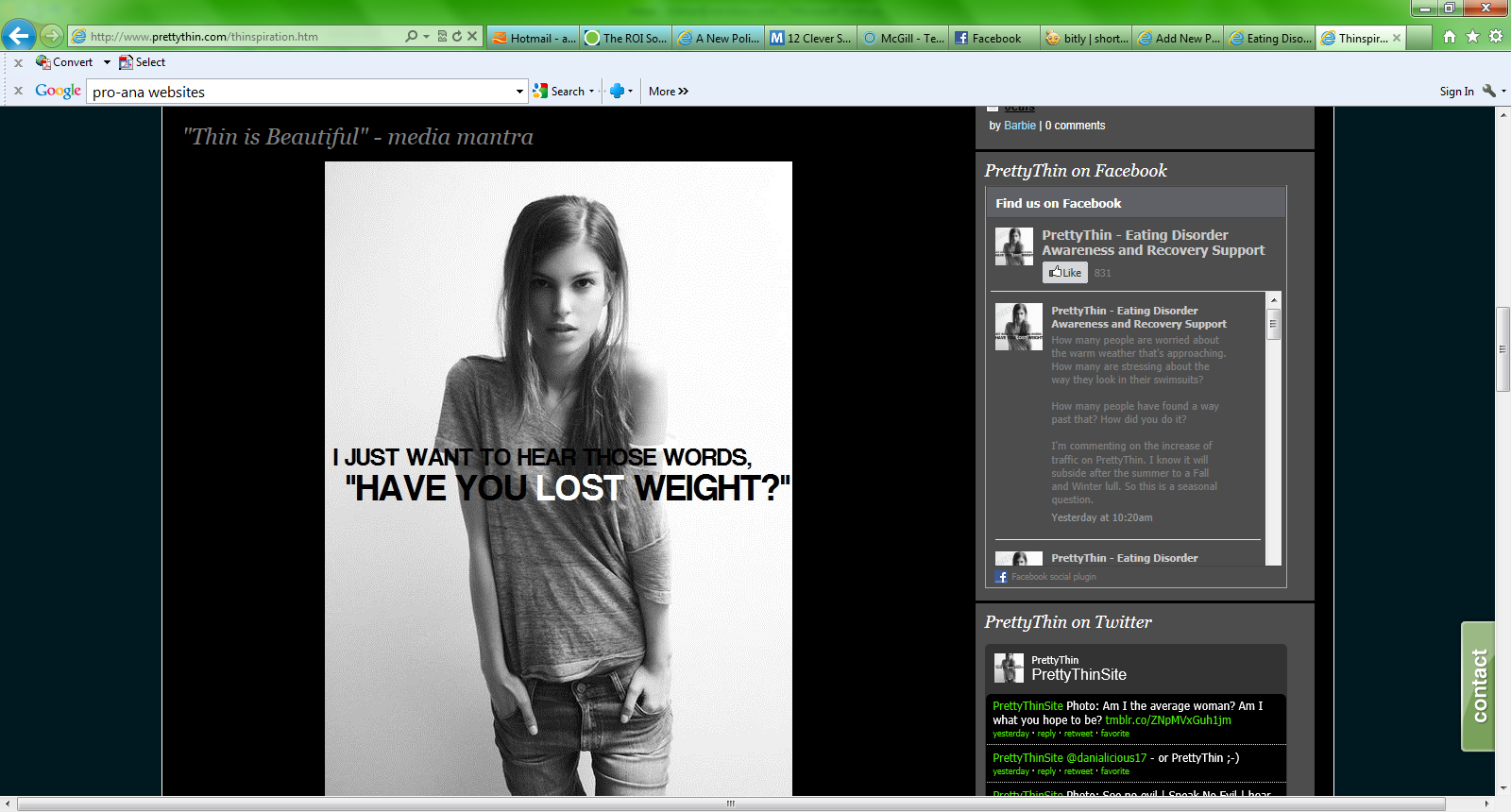
Parents and educators are often shocked to learn of the existence of pro-ana (pro-anorexia), pro-mia (pro-bulimia) and pro-cutting websites. Although these sites sometimes pretend to be support communities, their tips for hiding scars or discrete ways of vomiting up meals belie their underlying intent. And research has demonstrated that the images of skeletal bodies and open wounds serve as powerful triggers for young people struggling to stop these destructive behaviours.
It’s not just a matter of free expression. Health Canada data shows that eating disorders have the highest mortality rate of all mental illnesses, with somewhere between 10 and 20% of sufferers eventually dying from complications.
Educators often struggle with the way the Internet offers a much wider community of influence for kids than they used to have. It used to be that if your kids had a good group of friends, a supportive community and a good school, you might feel comforted about what they’d be exposed to. But Google has changed that, for good and for bad.
Which is one reason many are cheering Tumblr.com’s proposed new policy, which will prohibit blogs that promote self-harm. They are soliciting feedback and opinions, so I strongly urge you to read the following, check out the full explanation, and then email them your support (policy@tumblr.com).
1. Implement a new policy against pro-self-harm blogs. Here’s draft language we are planning to add to our Content Policy:
Active Promotion of Self-Harm.Don’t post content that actively promotes or glorifies self-injury or self-harm. This includes content that urges or encourages readers to cut or mutilate themselves; embrace anorexia, bulimia, or other eating disorders; or commit suicide rather than, e.g., seek counseling or treatment for depression or other disorders. Online dialogue about these acts and conditions is incredibly important; this prohibition is intended to reach only those blogs that cross the line into active promotion or glorification. For example, joking that you need to starve yourself after Thanksgiving or that you wanted to kill yourself after a humiliating date is fine, but recommending techniques for self-starvation or self-mutilation is not.We aim to begin implementing this policy next week. Of course, we will allow any affected blogs a grace period in which to edit or download your content.
2. Start showing PSAs on search results for related keywords. In addition, we plan to start posting “public service announcement”-style language whenever users search for tags that typically go along with pro-self-harm blogs. For example, when a user searches for tags like “anorexia”, “anorexic”, “bulimia”, “bulimic”, “thinspiration”, “thinspo”, “proana”, “purge”, “purging”, etc., we would show PSA language like:
Eating disorders can cause serious health problems, and at their most severe can even be life-threatening. Please contact the [resource organization] at [helpline number] or [website].So that’s our plan. We’d like your feedback. If you have any comments or suggestions, please email them to policy@tumblr.com.
In other news, I’ve got a couple of blog posts in the works. One is about the wonderful day I spent at McGill University, hosted by the Centre for Educational Leadership (CEL), speaking with teachers and school administrators about bullying and other risky behaviours. I learned so much from these men and women and I look forward to sharing those stories. The second is about the fabulous presentation I heard from motivational speaker Scott Fried about the secret lives of teens.